
Copper and Brass Cleaner for Pooja Utensils: Benefits, Uses and Cleaning Tips
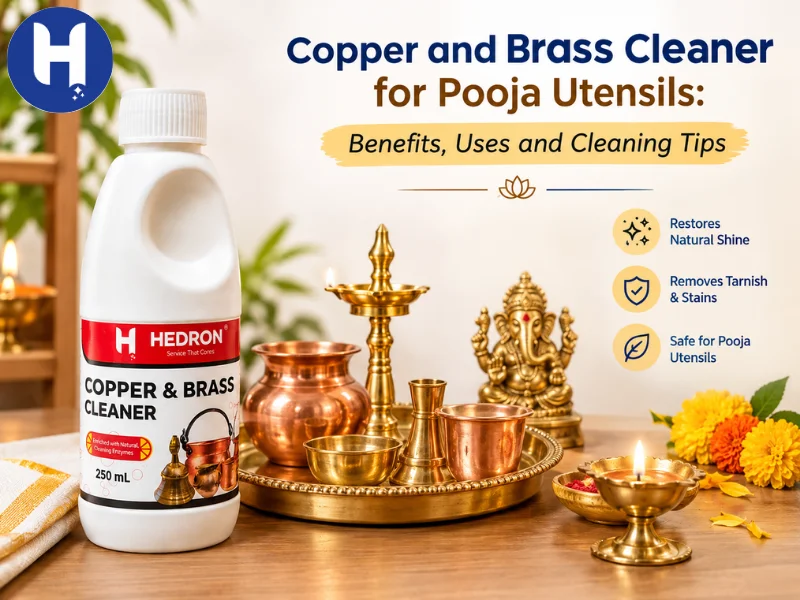
Every Indian home knows the feeling. You take out the copper kalash, brass diya or pooja thali for a festival, and it has gone dull, greenish or dark brown. The bells look faded, the lamps are stained with oil and soot, and the shine you remember is gone. Washing with soap and water barely helps, because tarnish isn’t ordinary dirt. This is where a good copper and brass cleaner for pooja utensils makes all the difference.
This guide explains why copper and brass tarnish, why a proper cleaner matters, and how a product like Hedron Copper and Brass Cleaner can bring back the original shine.
⚡ Quick Answer
The best copper and brass cleaner for pooja utensils removes tarnish effectively, restores shine without scratching the metal, and rinses off cleanly so it is safe for items used in worship. Hedron Copper and Brass Cleaner is a gel-based formula that is easy to apply and works on copper pooja items, brass lamps, kalash, bells, thalis and everyday utensils.
Why Copper and Brass Tarnish
Copper and brass react with oxygen, moisture and sulphur compounds in the air. This forms a dull layer of oxidation that appears as brown, black or green patches. Ghee, camphor, incense soot, kumkum, haldi and water marks add to the problem. That’s why even utensils kept in a cupboard lose their shine over time.
Benefits of Using a Copper and Brass Cleaner
A dedicated copper cleaner or brass cleaner does a job that soap and water can’t.
- Removes tarnish, not just dirt. It dissolves the oxidised layer instead of only washing off surface grime.
- Restores the original shine. Regular use brings back the warm, golden glow of brass and the reddish glow of copper.
- Saves time and effort. You don’t need to scrub for long or spend hours on festival clean-up.
- Gentler than home remedies. Lemon, tamarind, salt and rough scrubbers can leave scratches or uneven patches. A properly formulated cleaner is safer for the metal.
- Keeps items hygienic. Clean surfaces matter for utensils that touch water, food or offerings.
- Protect your investment. Neglected tarnish can eat into the surface and spoil fine carving on idols and lamps.
Copper Pooja Items Cleaner: Where It Helps
Copper kalash, lotas, panchpatra, achamani sets and water vessels are used daily in worship. They collect water stains, green deposits and dark spots. A good copper pooja item cleaner lifts these marks while keeping the metal’s natural look.
Brass Pooja Utensils Cleaner: Where It Helps
Brass diyas, samai lamps, bells, thalis, aarti plates and idols get covered in soot, oil and camphor residue. A reliable brass pooja utensil cleaner cuts through this build-up and brings out the golden finish. Many families clean their pooja articles before Diwali, Navratri and other festivals, and regular upkeep makes that clean-up much easier.
What to Look for in a Copper and Brass Cleaner
What to Check | Why It Matters |
Tarnish-removal effectiveness | It should clear tarnish, not just clean the surface |
Gentle on the metal | It should not scratch or damage carved or antique pieces |
Safe for pooja utensils | It should rinse off cleanly and leave no harmful residue |
Ease of use | It should be simple to apply and need little scrubbing |
Value for money | A small amount should clean many items |
 Pro Tip for Better Results
Don’t wait for your utensils to turn dark. Give pooja items a light clean every few weeks, and always dry them completely. Store copper and brass in a dry place, away from damp areas, to slow down tarnishing.
Introducing Hedron Copper and Brass Cleaner
Hedron Copper and Brass Cleaner is a gel-based cleaner designed for homes that want an easy, effective way to clean dull and tarnished metal articles. The gel form stays on the surface instead of running off, so it is simple to control and apply.
Here’s what makes it practical:
- Easy-to-use gel form: Spreads smoothly on the surface and clings to the metal.
- Effective tarnish removal: Helps remove dullness, stains, and accumulated dirt from copper and brass.
- Suitable for many articles: Works on pooja utensils, idols, lamps, kalash, bells, thalis, and decorative pieces.
- Minimal scrubbing: Light rubbing is usually enough.
- Convenient for regular care: Keeps your metal articles looking fresh between festivals.
How to Clean Copper and Brass Utensils: Step by Step
Wondering how to clean copper and brass utensils at home? Follow these five simple steps:
- Wet the utensils first. Rinse the item with water so the surface is damp.
- Apply a small amount of cleaner. Take a little Hedron Copper and Brass Cleaner gel and put it on the utensil.
- Rub lightly. Use a soft sponge and gently rub the gel over the surface. Pay extra attention to stained or carved areas.
- Wash with water. Rinse the utensil thoroughly until all the cleaner is removed.
- Wipe dry. Wipe with a soft cloth, and your utensils are ready to use and look new again
A Note for Pooja Utensils
Pooja utensils touch water, flowers, and offerings, so residue matters more than it does on a showpiece. Always rinse well after cleaning, dry fully, and check that no film or cleaner smell remains before using them. Choosing a well-formulated copper and brass cleaner for pooja utensils and following the directions keeps your articles bright without compromising everyday use.
Tips for Using Copper and Brass Cleaner the Right Way
- Follow the instructions on the pack. Using more than needed doesn’t mean better cleaning.
- Test on a small spot first, especially on antique, oxidized, or stone-studded pieces.
- Use a soft sponge or cloth. Avoid steel wool or rough scrubbers that can scratch the metal.
- Rinse thoroughly and dry immediately. Leftover water causes fresh spots and tarnish.
- Don’t mix it with other cleaning chemicals, as this can cause harsh reactions.
- Store it safely, away from children, in a cool, dry place.
Final Thoughts
Well-kept copper and brass isn’t just about looks. It’s about caring for articles that carry tradition, faith, and family memories. Whether you need a copper cleaner for kalash and lotas or a brass cleaner for diyas and thalis, the right product saves time and effort. With an easy gel formula and a simple five-step method, Hedron Copper and Brass Cleaner offers an easy and affordable way to keep your pooja utensils clean, bright, and ready for every occasion.
Frequently Asked Questions (FAQs)
1. What is the best copper and brass cleaner for pooja utensils?
The best copper and brass cleaner for pooja utensils is one that removes tarnish effectively, does not scratch the metal, and rinses off cleanly. Hedron Copper and Brass Cleaner is a gel-based cleaner that is easy to apply and works well on pooja items like kalash, diyas, bells, and thalis.
2. How do I clean copper and brass utensils at home?
First, wet the utensils with water. Then take a small amount of Hedron Copper and Brass Cleaner gel and apply it on the surface. Rub lightly with a soft sponge, wash thoroughly with water, and wipe dry with a soft cloth. Your utensils will look fresh and bright again.
3. Can I use the same cleaner for both copper and brass pooja items?
Yes. A good copper and brass cleaner is made to work on both metals. You can use it on copper lotas, kalash, and panchpatra as well as brass diyas, aarti plates, and idols. Always follow the instructions on the pack for best results.
4. Is it safe to use a copper and brass cleaner on pooja utensils?
Yes, when used as directed. Apply only a small amount, rinse the utensil thoroughly with water, and dry it with a soft cloth. Make sure no film or cleaner smell is left before using the item for worship.
5. How often should I clean my copper and brass pooja utensils?
A light clean every few weeks keeps tarnish from building up. Many families also give their pooja articles a thorough clean before festivals like Diwali and Navratri. Always dry the items completely and store them in a dry place to slow down tarnishing.