
Best Hard Water Stain Remover for Bathroom: Say Goodbye to Tough Water Marks
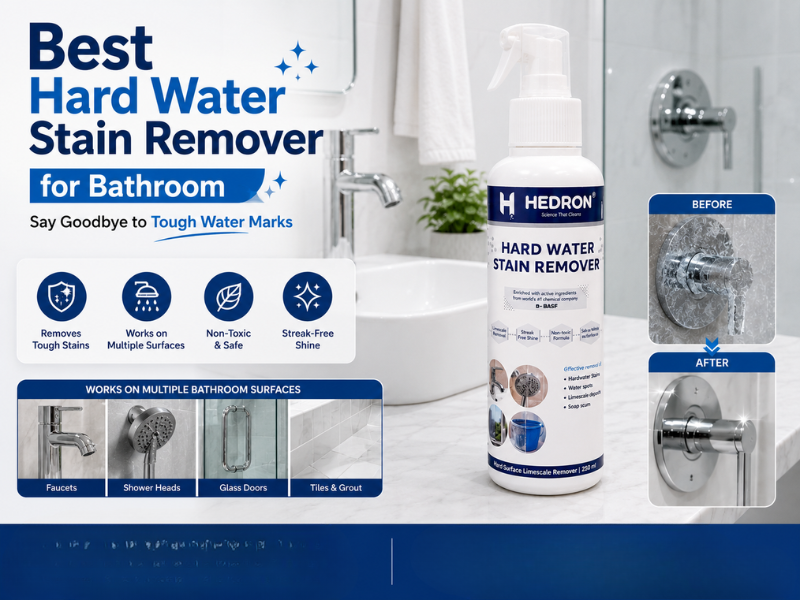
If you live in Delhi, Mumbai, Bengaluru, or almost any major Indian city, you know the struggle all too well—those white, chalky, stubborn stains that cling to your bathroom tiles, taps, showerheads, and glass doors no matter how many times you scrub them. These are hard water stains, and they are caused by the high concentration of dissolved calcium and magnesium minerals in your water supply. They do not just look unsightly over time; they can damage surfaces, clog fixtures, and make even a newly renovated bathroom look old and neglected. The good news? With the right hard water stain remover for bathroom use, removing even the toughest water marks is faster and easier than you think.
⚡ Quick Answer
For most bathroom surfaces, the best hard water stain remover combines an acidic agent (like citric acid or diluted hydrochloric acid) with a surfactant to lift mineral deposits without scratching. Apply directly to the stained surface, let it sit for 5–10 minutes, scrub with a non-abrasive pad, and rinse thoroughly. For glass doors and chrome taps, a pH-balanced formulation is safer and equally effective.
What are hard water stains?
Hard water contains high levels of dissolved minerals, primarily calcium carbonate and magnesium sulfate. When water evaporates on a surface (tiles, taps, glass, basins), these minerals are left behind as a white or greyish residue. Over repeated exposure, the deposits bond chemically to the surface, making them progressively harder to remove with plain soap or water.
Types of Hard Water Stains in Bathrooms
Understanding what type of stain you are dealing with helps you choose the right approach:
|
Stain Type |
Appearance |
Common Location |
Cause |
|
Limescale |
White / chalky crust |
Taps, showerheads, toilet bowl rim |
Calcium carbonate deposits |
|
Soap Scum + Minerals |
Cloudy grey film |
Tiles, bathtubs, shower walls |
Soap reacting with hard water minerals |
|
Rust Stains |
Orange-brown streaks |
Toilet bowl, basin drain |
Iron in water supply oxidising on surfaces |
|
Glass Etching |
Permanent haze |
Shower glass doors |
Long-term mineral bonding on glass |
|
Bluish-Green Stains |
Teal/green discoloration |
Around taps, basin edges |
Copper pipes reacting with acidic water |
How to Choose the Best Hard Water Stain Remover for the Bathroom
Not all bathroom cleaners are made equal. Here is what to look for when selecting a hard water stain remover in India:
1. Acidic Formula (pH Below 7)
Limescale and calcium deposits are alkaline in nature. An acidic cleaner — one containing citric acid, phosphoric acid, or hydrochloric acid — chemically reacts with and dissolves these minerals. This is the most critical feature of any effective hard water stain remover.
2. Surfactant Content
Surfactants help the acid penetrate stubborn soap scum layers, lift loosened deposits, and allow easy rinsing. A good bathroom limescale remover combines both acid and surfactant action for a thorough clean.
3. Surface Compatibility
Strong hydrochloric acid (HCl) products are highly effective on ceramic tiles and grout but can damage natural stone (marble and granite), chrome fixtures, and shower glass if used in high concentration. Always check the label for surface compatibility. For delicate surfaces, citric-acid-based formulas are safer.
4. Fragrance and Residue
A good hard water remover should not leave a pungent chemical odor or residue after rinsing. Look for products that include a mild fragrance and rinse cleanly, leaving surfaces looking bright and streak-free.
How to Use Hard Water Stain Remover: Step-by-Step Guide
Using a bathroom descaler correctly makes all the difference between a surface that comes out sparkling and one that just looks slightly less dull. Follow these steps for best results:
Step 1: Identify the Surface
Determine whether you are cleaning ceramic tiles, natural stone, glass, chrome, stainless steel, or plastic. This will determine the concentration and dwell time to use. Natural stone and chrome require a milder formulation or shorter contact time.
Step 2: Prepare the Area
Ventilate the bathroom by opening windows or turning on the exhaust fan. Wear rubber gloves. Remove any loose items from the surface. Rinse the surface with water first to loosen any surface dust.
Step 3: Apply the Remover
For concentrated products, dilute as directed — typically 1 part concentrate to 5–10 parts water for regular stains, or use more concentrate for heavy limescale build-up. Apply directly to the stained area using a spray bottle or sponge. Ensure complete coverage of all discolored sections.
Step 4: Allow Dwell Time
This is the most commonly skipped step — and the most important. Allow the cleaner to sit on the surface for 5–15 minutes depending on stain severity. The acid needs time to penetrate and dissolve the mineral bonds. Do not let it dry on the surface; re-apply if needed.
Step 5: Scrub and Agitate
Use a non-abrasive scrubbing pad, an old toothbrush (for grout lines and around taps), or a soft nylon brush. Scrub in circular motions for tiles and along the fixture length for taps and pipes. Avoid steel wool or harsh abrasives on glass or chrome.
Step 6: Rinse Thoroughly
Rinse the surface completely with clean water to remove all cleaning product residue. On glass and chrome, wipe dry immediately with a microfiber cloth to prevent new water spots from forming.
Benefits of Using a Dedicated Hard Water Stain Remover Regularly
- Extends the life of fixtures—limescale build-up can corrode chrome, clog aerators, and damage tap internals over time; regular removal prevents this damage.
- Keeps water pressure consistent — mineral deposits inside showerheads and tap aerators reduce water flow; descaling restores full pressure
- Prevents permanent etching on glass—if allowed to sit for months or years, mineral deposits chemically etch into glass surfaces, causing permanent haze that cannot be removed
- Reduces bacteria growth—rough limescale surfaces trap soap scum, mold, and bacteria; smooth, clean surfaces are inherently more hygienic.
- Makes regular cleaning faster and easier — a bathroom maintained with periodic descaling is far quicker to clean than one with years of mineral build-up.
- Improves appearance — gleaming tiles, clear glass, and shining taps simply look better and make a bathroom feel more inviting
✅ Pro Tip: For showerheads clogged with limescale, pour your diluted hard water remover into a small plastic bag and tie it around the showerhead so it is submerged in the solution. Leave for 30–60 minutes, remove, and run the shower. The mineral deposits will flush out with the water flow.
DIY Hard Water Stain Removal: When Home Remedies Work (and When They Don’t)
Many people try home remedies—white vinegar, lemon juice, and baking soda—before turning to dedicated cleaners. Here is an honest assessment:
White Vinegar: White vinegar (acetic acid at around 5% concentration) can dissolve light limescale deposits. It works well for routine maintenance on tiles and glass. However, for heavy or long-standing build-up—the kind that has been accumulating for months—the acetic acid concentration is too low to be fully effective. Additionally, it can damage natural stone and should never be used on marble.
Lemon Juice: Citric acid in lemon juice is effective and gentle enough for chrome and glass. It works best on fresh or light deposits. The limitation is cost and quantity — you would need large amounts for a full bathroom descaling, making it impractical for regular use.
Baking Soda: Baking soda is mildly alkaline and abrasive, making it useful for scrubbing away soap scum. However, it is not effective against calcium and magnesium mineral deposits because it does not lower pH enough to dissolve them. It works best in combination with vinegar or lemon for light cleaning.
For moderate-to-heavy hard water staining—which is the reality for most Indian bathrooms—a purpose-formulated bathroom descaler is significantly more effective, faster, and ultimately more economical than DIY remedies used repeatedly over time.
How to Prevent Hard Water Stains from Coming Back
Removing stains is only half the battle. Here is how to keep your bathroom looking clean longer:
- Wipe surfaces after every shower — use a squeegee on glass doors and a dry towel on taps to remove water droplets before they evaporate and leave mineral deposits.
- Use a bathroom spray weekly — a regular spritz of diluted bathroom cleaner on tiles and glass acts as a preventative descaling treatment.
- Install a water softener—for homes in high-TDS areas, a whole-house water softener or showerhead filter significantly reduces mineral content at the source.
- Descale monthly — even with good habits, a monthly deep clean with a hard water stain remover will prevent build-up from becoming a major problem.
- Dry chrome fixtures thoroughly — water sitting on chrome is the primary cause of tarnishing and limescale on taps; a dry finish prevents deposits from forming.
⚠️ Important: Never mix vinegar (acid) and baking soda (base) expecting a “super cleaner”—they neutralize each other, producing water and carbon dioxide. The fizzing action is not cleaning power; it is a chemical reaction that actually reduces the effectiveness of both ingredients.
FAQs
What is the best hard water stain remover for bathroom tiles in India?
The best hard water stain remover for bathroom tiles combines an acidic formulation (containing citric or phosphoric acid) with surfactants to lift mineral deposits and soap scum simultaneously. Products like Hedron Bharat’s bathroom cleaning concentrate are specifically designed for the high-TDS water conditions common across Indian cities and offer a concentrated, cost-effective solution for both regular cleaning and periodic deep descaling.
How do I remove hard water stains from shower glass doors?
For shower glass, use a mild citric-acid-based remover diluted in water (around a 1:8 ratio). Spray it onto the glass, leave it for 5–8 minutes, and then scrub gently with a soft, non-abrasive sponge. Rinse thoroughly and immediately wipe dry with a microfiber cloth to prevent new spots. For very heavy etching or cloudy glass that does not clear up, a glass-specific descaling paste may be needed, or the deposits may have permanently etched the glass surface.
Is it safe to use acid-based cleaners on bathroom taps?
Diluted acid-based cleaners are safe on chrome and stainless steel taps when used correctly—apply for no more than 3–5 minutes, then rinse thoroughly. Avoid using strong concentrations of hydrochloric acid on chrome, as prolonged exposure can strip the plating. For brass fixtures with a protective coating, always use a citric-acid formulation at mild dilution. Never use abrasive pads on any tap surface.
How often should I use a hard water stain remover in my bathroom?
For most Indian bathrooms, a thorough descaling once every 2–4 weeks is recommended for tiles, glass, and fixtures. The toilet bowl can benefit from a weekly treatment. In areas with very high TDS water (above 600 mg/L), fortnightly full-bathroom descaling is ideal to prevent heavy build-up from forming. Regular wiping of surfaces after use can extend the interval between deep cleans.
Can I use hard water stain remover on marble bathroom floors?
No. Acid-based hard water stain removers should never be used on marble, limestone, travertine, or any other natural stone. Acids etch and permanently dull these surfaces. For natural stone bathrooms, use a pH-neutral stone cleaner and remove mineral deposits by contacting a professional stone restoration service. Prevention through water softening and prompt drying is the best approach for marble bathroom surfaces.
💡
Hedron Bharat Bathroom Hard Water Stain Remover is a scientifically formulated concentrate that targets calcium, magnesium, limescale, and soap scum deposits across all common bathroom surfaces — tiles, grout, taps, toilet bowls, and shower glass. Just one bottle delivers multiple liters of powerful, ready-to-use solution. Visit hedronfmcg.com or WhatsApp +91 87961 96944 to order.